Horner Consulting partners with school districts, educational organizations, and nonprofit leaders to build systems that are equitable by design — not by aspiration.
Most organizations name equity as a priority. Fewer build the systems to sustain it.
The gap between commitment and practice is not a values problem. It is a design problem. Schools and organizations get stuck not because they do not care — but because caring alone does not redesign a structure, shift a culture, or change what a policy actually produces for the students most affected by it.
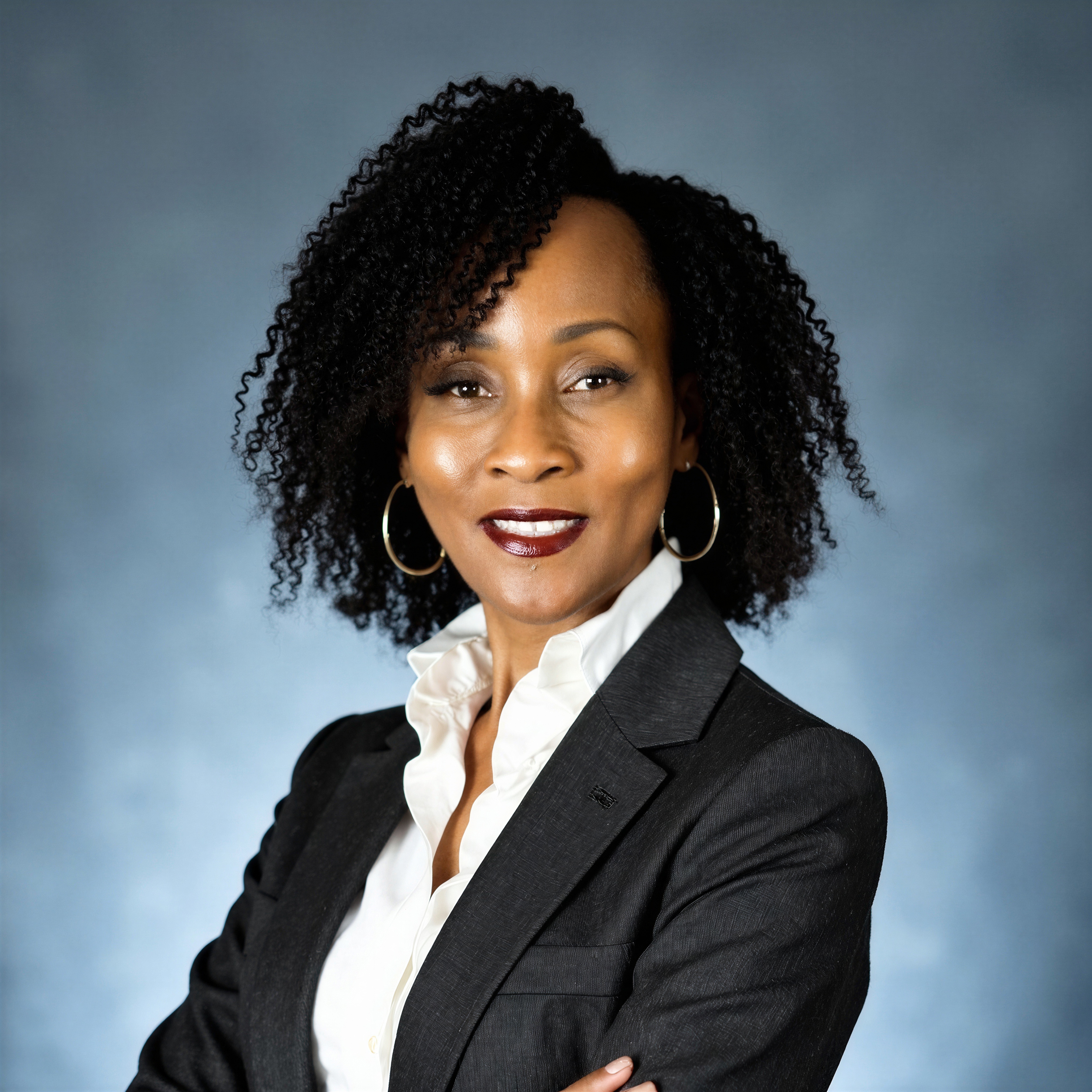
For more than twenty-five years, Christina Horner has worked inside schools, districts, governing bodies, and community organizations to name what is not working — and build what should. Not through a single training day. Not through a polished report that lives in a drawer. Through deep, sustained, honest partnership with leaders who are ready to examine what their systems are actually producing.
"Equity drives excellence forward, and empathy ensures the journey includes us all."— Christina Horner
Achieving justice by dismantling systemic barriers, amplifying marginalized voices, and creating inclusive opportunities for all to thrive. Both a process and a product — redesigning systems and reshaping the mindsets, practices, and policies that maintain harm.
Turning aspirations into measurable results that advance equity, strengthen communities, and sustain progress. Excellence is not accidental — it is built through daily, deliberate choices made by leaders willing to be honest about what their systems are producing.
Building authentic relationships through care, curiosity, and deep listening. The communities most affected by inequity hold knowledge that institutions cannot produce on their own. Empathy creates the conditions for true partnership — where that knowledge shapes what comes next.
Most DEIB consultants advise systems from the outside. Christina Horner has spent more than twenty-five years working from both sides of the table — as a practitioner and as a governing official, as a coach and as an elected leader, as an advocate and as the person in the room where decisions are actually made.
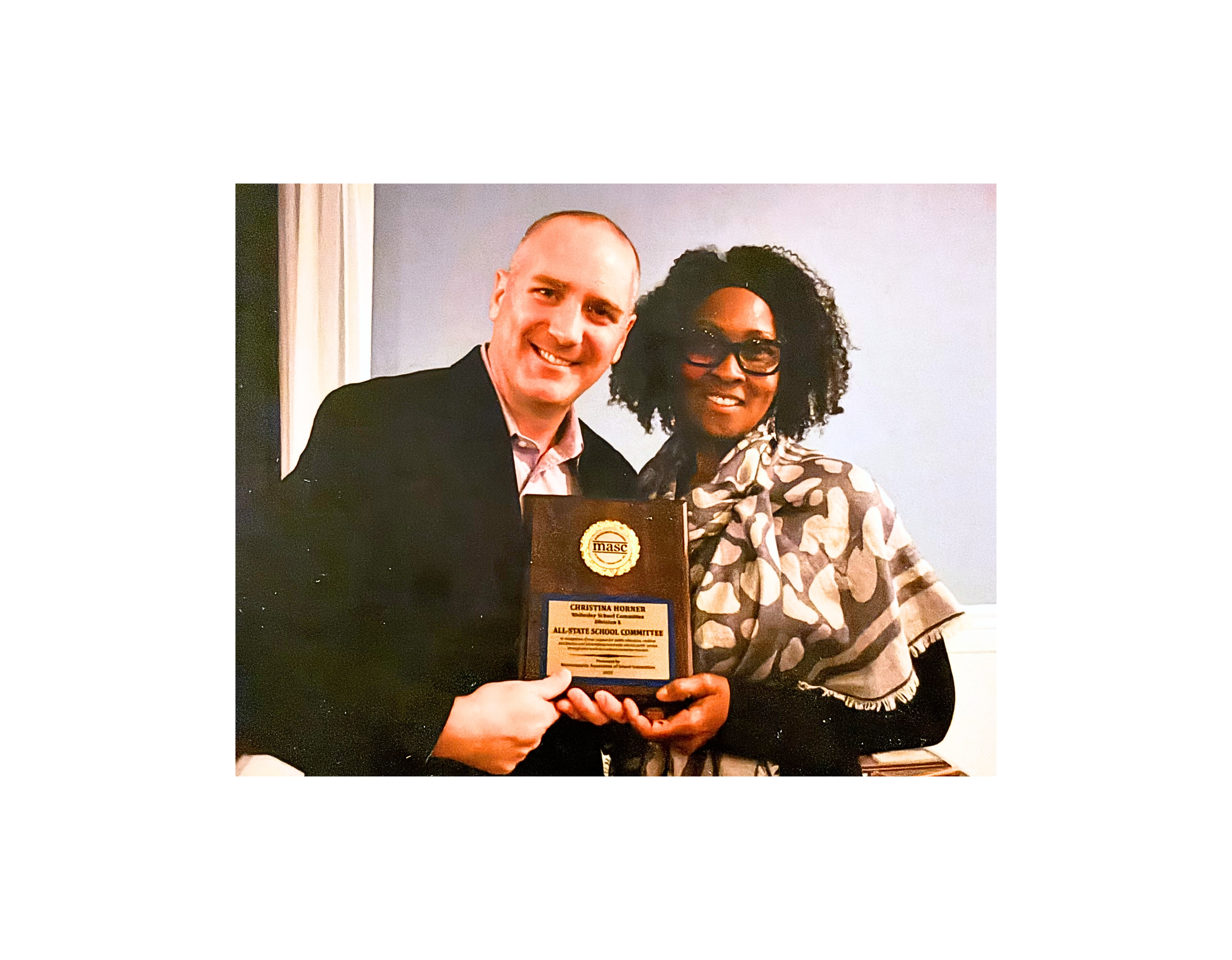
Elected to serve on a public school committee, a town meeting, and as statewide MASC Division X Vice Chair — governing from inside the system at the local, municipal, and state level simultaneously.
Led statewide professional learning as MASC Vice Chair for Diversity, Equity, Inclusion and Belonging, and was invited to contribute to a state level educator diversity advisory working group — bringing a practitioner's lens to policy rooms.
Served three consecutive terms on the Racial Imbalance Advisory Council, advising the Commissioner and Board of Education on school desegregation and integration across the state.
Selected for competitive national fellowships by 50CAN, School Board Partners, the Hunt Institute, and the National Equity Project — recognized as an emerging national leader in education policy and equity practice.
Completed 76 hours of intensive racial equity professional development including Beyond Diversity® I through III and the National Summit in the Capital — going far beyond a single workshop or awareness training.
Over twenty-five years inside classrooms, schools, coaching teams, and community organizations — working alongside the families and students most affected by the systems being redesigned.
There are many people who can speak about equity. Fewer have been inside the rooms where equity is actually won or lost — and come back to tell you what they saw.
When something goes wrong — around race, gender identity, disability, language, sexuality, or any dimension of who a student is — the instinct is to respond to the incident. A student says something harmful. A policy draws complaints. A community meeting gets tense. So we schedule a training. Write an apology. Update a handbook. But the incident was never the root. The framework at the center of Horner Consulting's work is the Four I's of Oppression — because real transformation requires working at all four levels simultaneously.
The beliefs and assumptions that make inequity feel natural, inevitable, or deserved — shaping how we see students, families, and what we believe they are capable of.
The policies, practices, and structures that encode harm — distributing opportunity and consequence unevenly in ways that mirror and reinforce the beliefs above them.
The harm enacted between people in daily interactions — in classrooms, hallways, meeting rooms, and community spaces — that both reflects and sustains institutional inequity.
What happens when people absorb the messages of a system that has undervalued them — carrying that harm forward as a private truth about their own worth or potential.
These four levels do not stand alone. Each one gives the next its permission. Address the interpersonal without touching the institutional — the harm just relocates. Retrain the adults but not the policies — the training wears off within a year. Change the policy but not the mindset — compliance appears; real change does not. Real transformation works at all four levels at once: in your policies, your practice, your culture, and your leadership. Race is the foundational lens of this work. But the Four I's apply wherever systemic harm operates — which is everywhere inequity exists. That is what Horner Consulting is built to do.
Equity is achieving justice by dismantling systemic barriers, amplifying marginalized voices, and creating inclusive opportunities for all to thrive. Equity is both a process and a product — the process of redesigning systems and reshaping mindsets, practices, and policies to eliminate barriers, and the product of dignity reflected in how people live, learn, and lead.
Horner Consulting offers a range of services designed for organizations ready to move from equity as an aspiration to equity as a functioning system. All engagements are tailored to the specific context, culture, and readiness of each partner.
Start the ConversationFor administrators, school board members, and organizational leaders navigating the intersection of equity, governance, and accountability. Grounded in deep knowledge of educational systems, policy, and the specific pressures leaders face when trying to do the right thing inside structures not always designed to support it.
Ideal for: Superintendents, principals, board members, nonprofit directors, and senior leadership teams.
For schools, districts, and organizations ready to move beyond awareness into practice. Professionally designed and delivered experiences that are culturally responsive, grounded in research, and built to change what adults do — not just what they believe.
Ideal for: Educator teams, leadership cohorts, school boards, and nonprofit staff.
For organizations that want an honest picture of where they are — not a confirmation of where they hope they are. Using a rigorous community centered assessment process grounded in the Four I's of Oppression framework, Horner Consulting examines policies, practices, and culture with your organization, not simply for it.
Ideal for: Districts, schools, nonprofits, and boards seeking a credible, community centered starting point.
For districts and organizations navigating new policy requirements and wanting to build structures that go beyond compliance. With direct experience contributing to policy conversations at state and national levels, Horner Consulting brings a practitioner's understanding of what policy frameworks require — and what it takes to build systems that will actually hold over time.
Ideal for: School districts, educational agencies, and organizations working to align practice with policy commitments.
For students, families, and communities who need a skilled navigator inside educational systems. Drawing on more than twenty-five years as an educator and elected official, Horner Consulting elevates the voices of those who are most often spoken about — but rarely spoken with.
Ideal for: Families, community organizations, and districts committed to genuine family partnership.
Every organization is at a different stage of this work. Horner Consulting begins every new partnership with a real conversation — not a sales pitch — about where you are, what you are trying to build, and what will actually move the needle in your specific context.
Christina's primary identity in this work is as a DEIB advocate, coach, and consultant. What sets her apart is a career that has moved across multiple sectors of the education ecosystem — as a practitioner, a governing official at three levels, a statewide leader, and a national fellow.
That cross-sector experience allows her to help organizations not just build better equity practice, but navigate the governance structures, accountability frameworks, and policy environments that shape what is actually possible inside your school or organization. Understanding how those systems work — and how to work within them on behalf of students — is what Christina brings to every engagement.
This is the difference between a consultant who teaches about systems and one who has lived inside them at every level.
"Equity commitments only matter when they are put into practice. Lasting change requires moving beyond aspirations and turning them into clear outcomes and the daily practices that sustain them."
— Christina Horner
Statewide Policy and Professional Learning · 2023 to 2026
Invited as MASC Division X Vice Chair to contribute to state level educator diversity implementation · 2026
Appointed by the Commissioner of Education · Three Consecutive Terms · 2016 to 2023
Policy Committee · SEPAC Liaison · 2023 to 2026
Precinct B · Voting on municipal budgets, bylaws, and governance policies · March 2022 to present
Competitive National Selection · Expected Completion May 2026
In Partnership with Colorado State University Global · 2025
National Fellowship · 2024
National Fellowship · 2023
National Policy and Advocacy Fellowship · 2024
76 hours of intensive racial equity training · Beyond Diversity® I through III and the National Summit in the Capital · 2024
"The communities most affected by inequity have always held the knowledge needed to transform it. The job is to share the power, not just the room."
For twenty-five years, Christina Horner has worked at the intersection of education, equity, and governance — not as an observer, but as a participant in the rooms where policy is written, where budgets are voted, where students are represented, and where adults are finally asked whether they are ready to change what they have been doing.
That trajectory — from classroom educator to METCO director, from coach to national fellow, from elected school committee member to statewide MASC leader — is not a résumé. It is a point of view.
Systems produce what they are built to produce. If you want different results for students, you have to build differently — not just talk differently.
Any school or organization serious about excellence is, by definition, serious about equity. You cannot achieve one without the other.
They are not the problem to be solved, and they are not stakeholders to consult after decisions are made. They are co-architects. Real transformation shares power with those closest to the harm.
Christina spent her early career inside schools — as a teaching assistant, teacher, and administrator — building family engagement structures, creating summer programs focused on closing equity gaps, directing Extended School Year services, and forging partnerships between Boston and suburban districts. She went on to serve at a national education nonprofit as Co-Director of Coaching, supporting a team of 18 coaches across three organizations and co-leading a multi-year Nellie Mae Education Foundation grant focused on equitable community engagement.
That practitioner foundation is what made the governance work possible. Elected to the Wellesley School Committee, to Town Meeting representing Precinct B, and to MASC Division X leadership as Vice Chair for DEIB, Christina has served simultaneously at the local, municipal, and statewide levels — a rare combination that lets her help organizations navigate governance structures, not just critique them.
Appointed by the Commissioner of Education to three consecutive terms on the Racial Imbalance Advisory Council, she advised on school desegregation and integration across the state. As MASC Division X Vice Chair, she was invited to contribute to the state's Educator Diversity Advisory Working Group — bringing a practitioner's lens into the rooms where policy takes shape.
Selected as a fellow by four national organizations, Christina has been recognized as an emerging national voice in education equity and governance. That recognition is the context for this work, not the point of it.
"The communities most affected by inequity have always held the knowledge needed to transform it. The job is to share the power, not just the room."Start That Work Together
Christina writes about the patterns she has observed across twenty-five years inside schools, districts, and policy spaces — naming what most people in this field are still working up to saying out loud.
Good intentions do not change student outcomes. And in education, we have been confusing the two for a long time. The phrases we repeat year after year become the process — and the students who needed something different are still waiting.
Every year, districts express the desire to close gaps. Yet many rely on instructional materials that virtually guarantee those goals cannot be met. Students are held accountable for mastering content they never had full access to. That is not a gap. It is a design choice.
DEIB in schools was never just about one group. It was about creating schools where every student feels seen, valued, and supported. The backlash we are witnessing is not about fairness or merit — and its consequences extend far beyond the communities targeted first.
"Christina's passion for education justice shines through in everything she does. She is resourceful, thoughtful, and an intentional guide, helping us see new ways to strengthen our approaches to achieving educational equity."
"Christina consistently makes a remarkable impact. Her unique strength lies in her ability to listen deeply, quickly establish trust, and expertly guide families and educators through complex systems. She is an asset to our organization."
Every day without honest systems work is a day those commitments remain aspirations. Horner Consulting is here for the leaders who are ready to turn them into practice.
Schedule a ConsultationIf what you have read resonates — or if you are sitting with a challenge in your school, district, or organization and are not yet sure what you need — reach out. A first conversation costs nothing and clarifies everything.
Christina works with a select number of partners at any given time to ensure that every engagement receives the depth it deserves.